Posts
2026 Top Precision Plastics Manufacturers for Global Buyers
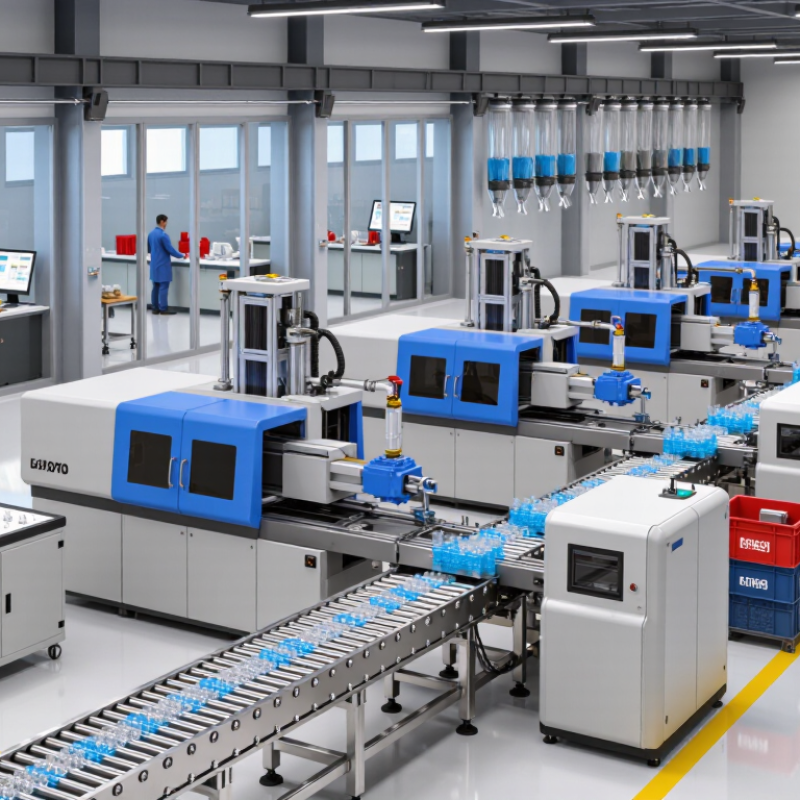
Choosing a precision plastics manufacturer in 2026 requires more than comparing prices or browsing polished company profiles. Global buyers need dependable evidence: production capabilities, material control, dimensional accuracy, quality systems, and documented delivery performance. This guide introduces leading manufacturers serving demanding industries, including medical devices, automotive systems, electronics, aerospace, and industrial equipment.
Details matter. A capable supplier should explain resin grades, mold-flow analysis, tooling ownership, tolerance control, and inspection methods. Buyers should look for traceability from incoming pellets to packed components. ISO 9001 certification can support confidence, but it should never replace independent verification. For regulated applications, ISO 13485, cleanroom controls, validation records, and regional compliance may also influence the final decision.
The companies discussed here are assessed through practical sourcing criteria rather than marketing language alone. Their equipment, engineering support, geographic reach, communication standards, and capacity planning deserve careful attention. Yet no ranking is perfect. Supplier data can change, factory visits may reveal limitations, and a strong reputation cannot guarantee every future shipment. Cost comparisons can also hide tooling risks, inspection expenses, or long lead times. Buyers should request current samples, drawings, certificates, and references before signing a contract. A precise component begins with precise questions. This overview aims to make those questions easier, while helping purchasing teams select reliable precision plastics partners for global production.
What Precision Plastics Manufacturing Means in 2026
Precision plastics manufacturing in 2026 means controlled performance, not merely smaller parts. It combines mold design, material science, process monitoring, and documented inspection. ISO 20457 defines tolerance principles for molded plastic parts, yet real applications often demand tighter control. A drawing alone cannot guarantee repeatability.
According to the OECD Global Plastics Outlook, global plastic production reached 460 million tonnes in 2019. Plastic waste reached 353 million tonnes that year.
These figures make material efficiency increasingly important. Precision manufacturers now reduce gate waste, monitor moisture, and validate recycled content carefully. Small process changes can affect shrinkage, surface finish, and assembly fit.
Digital control is becoming practical. Deloitte’s 2024 Smart Manufacturing and Operations Survey reported that 86% of manufacturing leaders considered smart manufacturing important for competitiveness within five years. Sensors can record cavity pressure, temperature, cycle time, and operator adjustments. Useful evidence.
However, a dashboard does not replace engineering judgment. Some factories collect impressive data but miss basic tool wear. That gap matters. Global buyers should request capability studies, inspection records, material certificates, and corrective-action history. They should also ask how suppliers handle variation during long production runs. Perfect consistency is difficult, even with advanced equipment. The honest supplier explains its limits, measures them, and improves them.
How Precision Plastics Manufacturers Are Evaluated Globally
2026 Top Precision Plastics Manufacturers for Global Buyers
Global buyers should evaluate precision plastics manufacturers through evidence, not polished presentations. Capability begins with dimensional control. Review drawings, tolerance bands, resin certificates, and inspection records from recent production lots. Ask how operators manage shrinkage, warpage, moisture, and tool wear. A coordinate measuring machine report matters, but the measurement method matters too. Confirm gauge calibration, sampling plans, and reaction procedures for rejected parts. Reliable suppliers explain limitations clearly. That honesty is valuable. An impressive sample may hide unstable mass production.
Tips:
Request a pilot run, inspect parts independently, and compare capability data with production reality. Ask for retained samples, packaging details, and shipment records. Test communication with one difficult question. Delayed or vague answers reveal risk. Check revision control, corrective-action reports, and material traceability. These details show operational maturity better than equipment lists.
Global evaluation also includes quality systems, workforce training, communication, and delivery resilience. Certifications support credibility, but current records and consistent results carry greater weight. Auditors should examine documented process parameters and maintenance history. They should also verify how production changes are approved. Some assessments still overvalue advanced machinery. That is a weakness. Local service needs, time zones, and changing resin availability can alter the final decision. No scorecard is perfect.
2026’s Top Precision Plastics Manufacturers for Global Buyers
For global buyers, the 2026 precision plastics market demands more than attractive quotations. Manufacturers must control resin moisture, mold temperature, dimensional shrinkage, and batch traceability. Fortune Business Insights valued the global injection molded plastics market at about USD 171.8 billion in 2023. Its forecast indicates continued growth through 2032, supported by medical, electronics, automotive, and industrial applications.
Quality evidence matters.
Strong suppliers typically combine validated tooling, automated inspection, and documented process control. Coordinate measuring machines can verify critical dimensions within micrometer-level tolerances, depending on the material and part design. ISO 9001 systems support consistency, while ISO 13485 may be essential for qualified medical-device production. Buyers should request capability studies, first-article reports, material certificates, and retained sample policies before approving mass production.
PlasticsEurope reported global plastics production near 414 million tonnes in 2023. That scale creates pressure for better efficiency and more responsible material choices. Leading manufacturers should offer recycled-content evaluation, scrap tracking, and energy monitoring without weakening performance.
Yet forecasts can overpromise. A supplier may show excellent samples but struggle with a 500,000-piece order. Buyers should test pilot runs, inspect early production, and review corrective-action records.
Clear communication about tolerances is still overlooked. A precise drawing cannot compensate for an unstable process.
Materials, Technologies, and Quality Systems to Compare
For global buyers, material selection should begin with the application, not the supplier’s catalog. PlasticsEurope’s Plastics—The Fast Facts 2024 reports 413.8 million tonnes of global plastics production in 2023. That scale hides major performance differences. PEEK suits high heat and chemical exposure, while LCP supports thin-wall electrical parts. PC/ABS balances impact strength and appearance. Ask for resin certificates, lot traceability, drying records, and molding-condition history. A glossy sample proves little.
Technology choices also deserve scrutiny. Precision manufacturers may combine micro-injection molding, insert molding, overmolding, CNC finishing, and automated optical inspection. For tight tolerances, request gauge repeatability and reproducibility studies, not only dimensional reports. CT scanning can reveal voids that surface inspection misses. Tool temperature, cavity pressure, and cooling time should be documented. Small details matter.
Quality systems create evidence, but certification alone cannot guarantee stable parts. The ISO Survey 2023 recorded 1,265,216 ISO 9001 certificates worldwide, showing broad adoption rather than equal capability. Compare process capability data, control plans, corrective-action records, and change-notification rules. ISO 13485 may matter for medical components; automotive programs may require PPAP discipline. I would still question any supplier promising zero variation. Real production has drift, maintenance gaps, and occasional imperfect measurements. A transparent supplier shows how those problems are detected and corrected.
| Anonymous Manufacturer Profile | Core Manufacturing Process | Typical Engineering Materials | Representative Part-Size Range | Typical Dimensional Capability | Surface-Finish Options | Tooling and Production Technology | Quality Systems and Standards | Inspection and Validation Methods | Best-Fit Applications | Global-Buyer Evaluation Points |
|---|---|---|---|---|---|---|---|---|---|---|
| Profile A High-Precision Injection Molding |
Tight-tolerance thermoplastic injection molding for repeatable medium- and high-volume production. | POM PA 6/66 PC ABS PBT PEEK | Small technical components up to approximately 600 mm projected part length, depending on machine capacity and mold design. | Common production capability: approximately ±0.05 to ±0.15 mm on controlled dimensions; tighter values require material, geometry, and process review. | Mold-polished, textured, matte, bead-blasted, and EDM-generated finishes; cosmetic requirements should be defined with standardized samples. | CNC mold machining, wire EDM, sinker EDM, hot-runner systems, automated part removal, cavity-pressure monitoring, and scientific molding studies. | ISO 9001; ISO 14001 may be available; sector-specific controls should be confirmed for automotive, medical, or aerospace work. | Coordinate measuring machine inspection, optical measurement, gauge repeatability and reproducibility studies, first-article inspection, and process capability analysis. | Automotive interiors, electrical housings, industrial controls, consumer electronics, and precision mechanical assemblies. | Confirm resin traceability, mold ownership, cavity balance, shrinkage compensation, annual requalification, and change-notification procedures. |
| Profile B Medical and Cleanroom Molding |
Controlled injection molding for regulated components and assemblies requiring documented process control and contamination management. | PP PE PC POM TPU Medical-Grade Resins | Micro-molded parts below 1 g through housings of approximately 300 mm, subject to cleanroom equipment and tool configuration. | Typical controlled molding capability: approximately ±0.05 to ±0.20 mm; validation and inspection plans determine the released tolerance. | Low-particle mold-polished, fine-textured, and controlled matte surfaces; cosmetic acceptance limits are normally established by approved master samples. | Cleanroom molding, validated drying, automated vision inspection, cavity identification, resin lot control, and documented cleaning procedures. | ISO 13485 for medical-device quality management; ISO 14644-1 for cleanroom classification where applicable; ISO 9001 may also apply. | IQ/OQ/PQ validation, bioburden or particulate controls where required, dimensional inspection, visual inspection, material certification, and batch records. | Diagnostic disposables, laboratory equipment, drug-delivery components, surgical accessories, and fluid-management products. | Verify regulatory responsibility, sterilization compatibility, extractables and leachables requirements, packaging validation, and production-change controls. |
| Profile C Automotive-Grade Thermoplastic Production |
High-volume injection molding with automated handling and process monitoring for demanding vehicle programs. | PP-TD PA-GF PBT-GF ABS/PC TPE | Components from small clips and brackets to instrument-panel or under-hood parts exceeding 500 mm, depending on press size. | Typical production capability: approximately ±0.10 to ±0.30 mm; functional datums and critical features may require dedicated process studies. | Grain-matched textures, low-gloss textures, high-gloss cosmetic surfaces, laser marking, pad printing, and selective coating. | Multi-cavity molds, robotic automation, insert molding, overmolding, hot runners, in-line vision systems, and traceable process data collection. | IATF 16949; ISO 9001; customer-specific automotive requirements may include APQP, PPAP, FMEA, MSA, and SPC documentation. | CMM inspection, optical scanning, material testing, dimensional capability studies, environmental testing, assembly checks, and PPAP packages. | Interior trim, connectors, sensor housings, brackets, powertrain-adjacent components, and electric-vehicle systems. | Review production-part approval timing, end-of-line testing, warranty traceability, capacity reservation, mold-maintenance planning, and logistics continuity. |
| Profile D Precision CNC Plastic Machining |
CNC milling, turning, routing, and multi-axis machining for prototypes, low-volume production, and complex polymer components. | PEEK PTFE POM PA UHMW-PE PEI | Prototype and production parts commonly ranging from a few millimeters to approximately 1,000 mm, depending on machine envelope. | Typical CNC capability: approximately ±0.02 to ±0.10 mm; thin walls, long parts, and moisture-sensitive materials may require wider limits. | Machined smooth, bead-blasted, deburred, polished, laser-marked, or supplied with controlled edge breaks. | Three-, four-, and five-axis machining, mill-turn operations, probing, vacuum fixturing, dedicated soft jaws, and digital work instructions. | ISO 9001; ISO 14001 may be available; aerospace or medical accreditation should be verified separately. | CMM, calibrated micrometers and height gauges, optical comparators, surface-roughness measurement, material certificates, and inspection reports. | Semiconductor equipment, laboratory instruments, aerospace interiors, pump components, electrical insulation, and custom machinery. | Confirm material moisture conditioning, grain direction, stress-relief practice, minimum wall thickness, burr limits, and datum strategy. |
| Profile E Insert Molding and Overmolding |
Thermoplastic molding around metal, electronic, or polymer inserts to combine structural, sealing, and insulation functions. | PA PBT PC TPE TPU LCP | Small connectors and sensor parts through assemblies approximately 400 mm in length, subject to insert geometry and automation. | Typical capability: approximately ±0.05 to ±0.20 mm for molded features; insert location and metal-part tolerances must be evaluated together. | Molded textures, sealed interfaces, controlled flash limits, laser marking, and selective plating or coating of inserts. | Pick-and-place automation, insert detection, rotary molding cells, ultrasonic staking, heat staking, and electrical continuity testing. | ISO 9001; IATF 16949 may apply to automotive programs; additional electrical or safety standards depend on the end product. | Vision inspection, pull-force testing, leak testing, dielectric or continuity testing, CMM inspection, and cross-section analysis. | Electrical connectors, cable assemblies, sealed sensors, medical handles, switches, and electromechanical modules. | Check insert cleanliness, thermal-expansion compatibility, retention force, flash control, automated error-proofing, and assembly yield. |
| Profile F Rapid Prototyping and Low-Volume Production |
Short-lead-time additive manufacturing, soft tooling, urethane casting, and low-volume injection molding. | SLA Photopolymer SLS Nylon MJF Nylon FDM Thermoplastics Soft-Tooling Resins | Prototype features from approximately 10 mm to 500 mm; build volume varies significantly by process and equipment. | Typical additive capability: approximately ±0.10 to ±0.30 mm plus process-dependent scaling; critical production features need post-machining or inspection. | Natural printed finish, bead-blasted, vapor-smoothed, hand-finished, primed, painted, or machined after printing. | SLA, selective-laser-sintering-type nylon production, multi-jet-fusion-type powder-bed processes, silicone tooling, and bridge tooling. | ISO 9001 is common; material and process qualification should be confirmed for safety-critical or regulated applications. | Dimensional inspection, material data sheets, density checks, visual inspection, fit testing, functional testing, and prototype validation reports. | Concept models, fit-and-function prototypes, pilot builds, replacement parts, tooling aids, and market-test quantities. | Confirm anisotropy, surface durability, UV resistance, production-equivalent material availability, batch consistency, and transition-to-molding plans. |
| Profile G High-Performance and Reinforced Polymer Components |
Processing of high-temperature, chemically resistant, and fiber-reinforced polymers for demanding operating environments. | PEEK PEI PPS LCP PA-GF/CF PEEK-CF | Precision parts from small seals and retainers to housings of approximately 300 mm, depending on processing method. | Typical capability: approximately ±0.03 to ±0.15 mm; fiber orientation, post-mold shrinkage, and thermal conditioning strongly affect results. | Precision-machined, mold-polished, textured, laser-marked, or supplied with controlled flash and gate vestige limits. | High-temperature injection molding, controlled resin drying, annealing, precision machining, insert molding, and process-window studies. | ISO 9001; aerospace, medical, or automotive certifications should be confirmed according to the intended application. | CMM, thermal conditioning, mechanical testing, microscopy, fiber-orientation review, chemical-resistance testing, and lot-level traceability. | Aerospace systems, semiconductor equipment, chemical-processing equipment, energy systems, and high-temperature electrical assemblies. | Verify resin grade, drying and storage controls, annealing cycle, operating-temperature data, chemical compatibility, and long-term dimensional stability. |
| Profile H Integrated Finishing and Assembly |
Plastic molding or machining combined with secondary finishing, decoration, subassembly, packaging, and delivery management. | ABS PC PMMA PP PA TPE | Finished components from small handheld-product parts to assemblies approximately 700 mm in length. | Typical capability: approximately ±0.10 to ±0.30 mm for molded features; assembly tolerances depend on the complete product stack-up. | Painting, printing, laser marking, plating, film application, ultrasonic welding, heat staking, and cosmetic inspection. | Injection molding, CNC trimming, automated assembly, torque-controlled fastening, leak testing, functional testing, and serialized packaging. | ISO 9001; ISO 14001 may be available; product-specific compliance may include restricted-substance and packaging requirements. | Appearance standards, color measurement, gloss measurement, torque testing, leak testing, functional testing, and outgoing quality audits. | Consumer electronics, appliances, industrial instruments, lighting products, and branded-equipment assemblies. | Evaluate cosmetic master samples, color-control methods, coating adhesion, assembly error-proofing, packaging protection, and after-sales support. |

How Global Buyers Can Select the Right Manufacturer
Selecting a precision plastics manufacturer starts with evidence, not attractive promises. Ask for recent samples, dimensional reports, and material certificates. A reliable supplier should explain resin traceability from incoming material to final shipment. Look for controlled molding conditions, documented inspections, and clear tolerance capabilities. If a component requires a 0.02 mm tolerance, confirm how the supplier measures it. Calipers alone may not provide enough confidence.
Global buyers should review the manufacturer’s engineering process before signing a contract. Request design-for-manufacturing feedback, mold-flow analysis, and a formal production validation plan. Experienced teams identify weak walls, sink marks, warpage, and difficult ejection points early. They should also explain tool maintenance, spare parts, and ownership terms. Ask how engineering changes are approved and recorded. Small communication gaps can become expensive production delays.
A factory audit can reveal details that brochures rarely show. Check machine maintenance records, inspection areas, operator training, and storage conditions. Reliable manufacturers welcome practical questions. They should provide realistic lead times, not perfect answers. No supplier performs flawlessly every time. What matters is how quickly problems are reported, contained, and corrected. Review their corrective-action records and speak with technical contacts directly. Time-zone coverage, packaging methods, export experience, and backup capacity also deserve attention. One overlooked detail can affect thousands of parts.
Related Posts
-
Why is Plastic Fabrication Important for Modern Industries?
-
10 Injection Molding Tips for Global Buyers
-
2026 Top Trends in Plastic Fabrication Innovations and Applications?
-
Top Plastic Parts Innovations in Modern Manufacturing?
-
What are the Best Plastic Molding Machines of 2026?
-
What Is Plastic Cut to Size and How Does It Work?