
Posts
How to Choose a Seamless Carbon Steel Pipe Supplier?
Choosing a Seamless Carbon Steel Pipe Supplier is a technical decision, not merely a price comparison. The World Steel Association reported global crude steel production of about 1.89 billion tonnes in 2023. This scale shows the market’s depth, but it also makes supplier quality difficult to judge. Large production numbers do not guarantee reliable pipe performance.
A capable supplier should demonstrate control from billet selection to final inspection. Request material certificates, heat numbers, dimensional records, and hydrostatic test results. ASTM A106, ASTM A53, API 5L, and ASME B36.10M may apply, depending on the service and project design. The U.S. Geological Survey’s Mineral Commodity Summaries 2024 also highlights steel’s importance across construction, energy, transportation, and manufacturing. That broad demand increases the need for traceable sourcing and consistent production.
Look beyond attractive quotations. Ask how the supplier manages wall-thickness tolerance, surface defects, straightness, packaging, and delivery records. A serious Seamless Carbon Steel Pipe Supplier should explain its inspection process clearly, preferably with independent testing evidence and an ISO 9001-certified quality system. Factory experience matters. So does communication when a specification changes at the last minute.
Cheaper is not always safer.
Some buyers overlook small details, such as rusty thread protectors or unclear marking. Those details can signal weak control. Still, certificates alone are not enough; documents can be incomplete, outdated, or misunderstood. This guide examines supplier capability, standards, testing, production experience, logistics, and after-sales support, helping buyers make a more defensible decision.
Define Your Seamless Carbon Steel Pipe Requirements
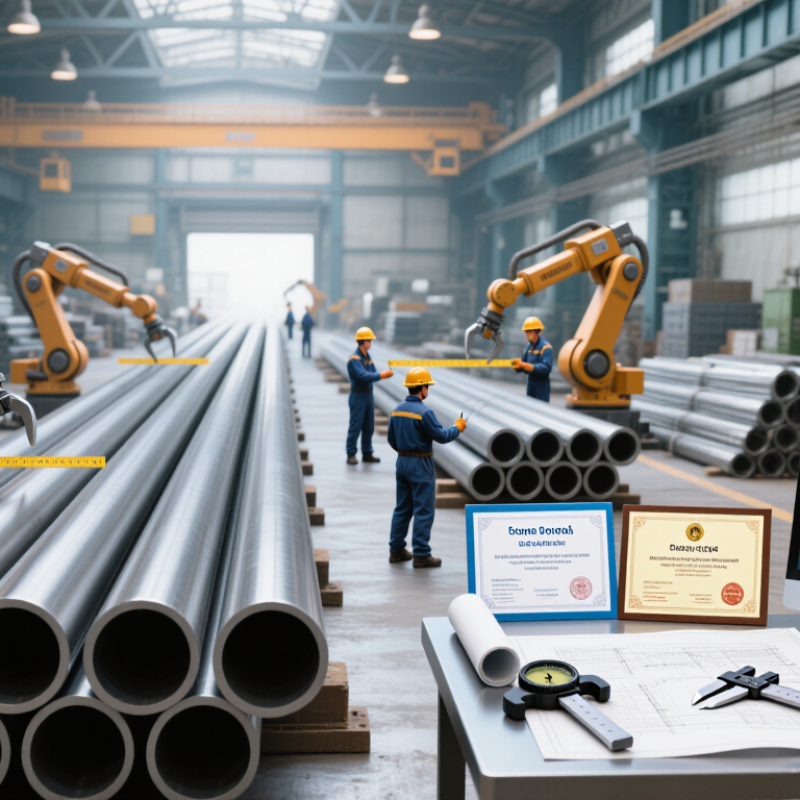
Before comparing seamless carbon steel pipe suppliers, define the service conditions clearly. Record the outside diameter, wall thickness, pipe length, and dimensional tolerance. State the required steel grade and applicable manufacturing standard. Do not rely on phrases like “heavy duty” or “high quality.” They are too vague.
Describe the medium flowing through the pipe, including pressure, temperature, and corrosion risks. A pipe for water service may need different testing from one carrying hot oil or compressed gas. Specify end preparation, such as plain, beveled, or threaded ends. Include the connection method and installation environment. Indoor storage is not the same as coastal exposure. Small details matter.
Ask suppliers for material certificates, heat numbers, test reports, and traceability records. Confirm whether hydrostatic testing, ultrasonic inspection, or visual checks are included. Also review length ranges, allowable ovality, surface defects, and packaging practices. Experienced purchasers often overlook loading protection, then find damaged ends at the job site. That mistake is avoidable.
Your quantity and delivery schedule should be realistic. Give the supplier a forecast, not only a single purchase figure. It helps them assess production capacity and stock availability. I would also request a sample inspection plan before placing a large order. The plan may reveal unclear acceptance criteria. Revise it when necessary. A technically strong specification is useful only when both sides interpret it identically.
Define Your Seamless Carbon Steel Pipe Requirements
Before choosing a seamless carbon steel pipe supplier, confirm the required standard and grade. The chart compares minimum yield and tensile strength values for widely used carbon steel pipe specifications.
Values shown are minimum mechanical requirements in MPa: ASTM A106 Grade B, ASTM A53 Grade B, and API 5L PSL1 Grades B, X42, and X52. Confirm the applicable edition, PSL, heat treatment, dimensions, and inspection requirements before purchasing.
Verify Supplier Standards, Certifications, and Manufacturing Capabilities
Choosing a seamless carbon steel pipe supplier requires more than comparing prices. Verify the supplier’s standards, certificates, and production records before discussing contracts.
Ask for current ISO 9001 certification and product compliance documents for ASTM, ASME, or EN requirements. Check the certificate scope, expiry date, issuing body, and covered manufacturing site. A certificate without matching product coverage proves little. Request recent mill test certificates showing heat numbers, chemical composition, tensile strength, and hydrostatic test results. Traceability matters.
Manufacturing capability should match your actual service conditions. Confirm whether the mill controls piercing, hot rolling, heat treatment, and cold drawing internally. Review equipment lists, furnace temperature records, ultrasonic testing procedures, and dimensional inspection reports. Ask how the supplier handles nonconforming pipes. Good answers include documented isolation, root-cause analysis, and corrective action.
Visit the facility if possible. Look at material tags, storage conditions, and inspection stations, not only polished offices.
A small sample order can reveal more than a confident presentation. Measure outside diameter, wall thickness, straightness, and surface condition independently. I have seen impressive paperwork fail to explain inconsistent wall thickness. That should make every buyer pause. Capacity claims also deserve checking against furnace size, monthly output, and delivery history. Reliable suppliers welcome technical questions and provide verifiable evidence. Perfect confidence is not necessary; transparent limits are often more trustworthy.
Evaluate Pipe Quality, Testing Procedures, and Traceability
When choosing a seamless carbon steel pipe supplier, inspect quality evidence, not polished promises. The World Steel Association reported approximately 1.89 billion tonnes of crude steel production in 2023. This scale makes heat identification and material control essential.
Request the original mill test certificate for every production batch. Confirm chemical composition, yield strength, tensile strength, elongation, heat number, and pipe dimensions.
Relevant standards, such as ASTM A106 or EN 10216-1, define important acceptance requirements. However, a certificate alone is not proof. Check whether the reported values match independent test records.
Ask for hydrostatic testing details, including pressure, holding time, and leakage criteria. For critical applications, review ultrasonic or electromagnetic inspection procedures. The supplier should explain equipment calibration and operator qualification.
ISO 9001:2015 emphasizes controlled identification and traceability when traceability is required.
EN 10204 type 3.1 documentation can provide stronger batch-level evidence.
Traceability should follow the pipe from steel coil or billet to final packing. Heat numbers must remain visible after cutting, coating, and bundling.
I have seen paperwork look complete while markings were partly unreadable. That is a practical warning.
Request random sample verification, calibrated gauge records, and nonconformance reports. The supplier’s response to one failed test can reveal more than a perfect brochure. Supplier audits should also compare production logs, inspection reports, and delivery labels. Small mismatches deserve questions.
Compare Pricing, Delivery Capacity, and Supply Reliability
How to Choose a Seamless Carbon Steel Pipe Supplier?
Price matters, but the lowest quotation rarely tells the whole story. Compare prices on the same basis: pipe grade, outside diameter, wall thickness, length, tolerance, testing, packaging, and delivery terms. A supplier may quote less while excluding inspection documents or protective end caps. Request a line-by-line quotation. Ask for evidence.
From project experience, delivery capacity is easier to judge through details than promises. Review current production schedules, monthly output, and available stock. Confirm whether the supplier owns manufacturing equipment or depends heavily on outside processors. Ask for a realistic lead time for your exact specification. A shipment promised in ten days may require forty. That gap can disrupt fabrication and installation.
Supply reliability requires more than a polished website. Check sample inspection reports, traceability procedures, and records of previous export or industrial orders. Speak with technical staff, not only sales representatives. They should explain dimensional tolerances, hydrostatic testing, surface conditions, and packing methods clearly. Delivery performance should also be measured against agreed dates, not estimated dates.
A supplier with slightly higher pricing may reduce storage costs, emergency freight, and production downtime. Still, reliability is not guaranteed by price alone. I once treated a detailed quotation as proof of capacity, which was a mistake. Verify production slots, inspection timing, and communication procedures before placing a large order. Keep the conversation documented.
Assess Technical Support, Communication, and After-Sales Service
How to Choose a Seamless Carbon Steel Pipe Supplier?
A supplier’s technical support often reveals more than its product catalogue. Ask whether engineers can review pressure, temperature, fluid, and installation conditions. Experienced teams should explain material grades, wall thickness, heat treatment, and applicable standards clearly. They should also provide mill test certificates, dimensional reports, and traceability records for each production batch. Ask for practical examples, not polished promises.
Communication matters during quotation, production, inspection, and delivery. A reliable supplier names one responsible contact and confirms technical details in writing. Response speed is useful, but accuracy matters more. Misunderstood tolerances can create costly problems during fitting. Request drawings, inspection plans, and schedule updates before production begins. Small communication gaps often become large delays.
After-sales service should include documented complaint handling and technical guidance after delivery. Ask how the supplier manages damaged pipes, incorrect dimensions, or missing certificates. Their process should identify causes, propose corrective action, and record the resolution. In real projects, no supplier communicates perfectly. I have seen capable teams respond quickly but explain problems poorly. That weakness deserves attention. A short trial order, sample inspection, and clear service agreement can expose such risks before a larger commitment. Reliable support is demonstrated through evidence, consistent follow-up, and accountability when something goes wrong.
