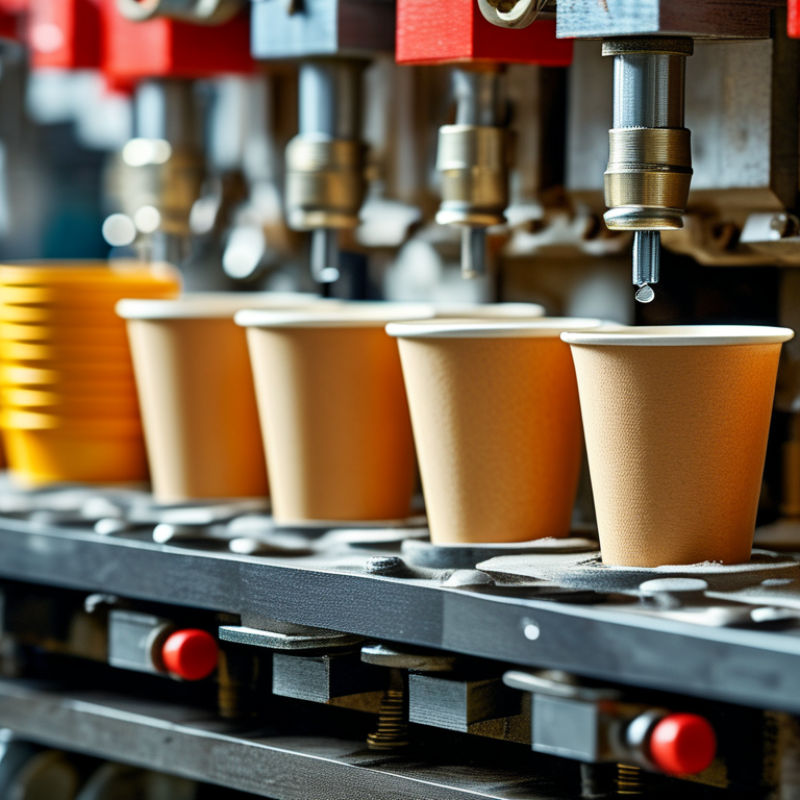
Why Invest in a Paper Cup Inspection Machine for Quality Control?
In today's competitive market, ensuring product quality is essential. Manufacturers of paper cups face pressures to meet high standards. A Paper Cup Inspection Machine plays a pivotal role in achieving consistent quality control. This technology helps identify defects and maintain production efficiency.
Investing in a Paper Cup Inspection Machine can significantly reduce waste. Manufacturers can catch flaws early in the production line. This proactive approach prevents costly recalls and damaged reputations. Regular inspection fosters reliability, making businesses more trustworthy to clients.
However, not every machine is perfect. Some challenges may arise during implementation. Businesses must assess their specific needs and capabilities. Understanding these intricacies can lead to better decision-making and enhanced quality assurance.
Benefits of Implementing a Paper Cup Inspection Machine in Production
Paper cup production is a rapidly growing industry. The global paper cup market is projected to reach $2.67 billion by 2027, expanding at a CAGR of 4.0%. This growth highlights the need for exceptional quality control. Implementing a paper cup inspection machine can greatly enhance production standards.
These machines perform rigorous checks on cups for defects such as misprinted logos, improper sealing, and dimensional inaccuracies. Research indicates that 78% of manufacturers face issues with product consistency. This inconsistency can lead to significant financial losses and reputational damage. A machine can detect flaws that human inspectors might overlook, reducing the chances of faulty products reaching the market.
Moreover, integrating this technology can result in a 30% increase in production efficiency. It minimizes manual checks and accelerates the inspection process. However, initial investment costs can be a barrier. Companies must weigh these costs against potential savings and quality improvements. Investing in automation may seem daunting initially, but the long-term benefits are often undeniable.
Benefits of Investing in a Paper Cup Inspection Machine
Key Features to Look for in a Quality Control Inspection Machine
Investing in a paper cup inspection machine can significantly enhance quality control processes. When selecting such a machine, several key features are crucial. Look for automated inspection capabilities. These can dramatically improve efficiency by reducing human error. Additionally, a machine that utilizes advanced imaging technology is essential. This allows for precise defect detection, ensuring every cup meets high standards.
Focus on the machine's speed and accuracy. A reliable inspection machine should process large volumes without losing precision. Implementing real-time monitoring can also be beneficial. This feature allows manufacturers to identify issues immediately, preventing defective products from entering the market. However, be cautious. Machines may require frequent calibration to maintain their accuracy, a factor often overlooked.
Consider ease of use as well. A complex interface can hinder productivity. Choosing a machine with intuitive controls can streamline operations. However, even user-friendly machines sometimes present challenges. Regular training and updates are necessary to avoid lapses in expertise. Investing in a quality inspection machine is not just about cost. It’s about commitment to product excellence and consumer satisfaction.
Why Invest in a Paper Cup Inspection Machine for Quality Control?
| Feature | Description | Benefits | Importance Level |
| Automated Detection | Uses sensors to automatically identify defects in cups. | Increases accuracy and reduces manual inspection errors. | High |
| Speed of Operation | Capable of inspecting large volumes of cups per minute. | Enhances production efficiency and throughput. | High |
| User-Friendly Interface | Intuitive controls and software for easy operation. | Reduces training time for operators. | Medium |
| Data Logging | Records inspection data for analysis and improvement. | Facilitates quality control tracking and reporting. | High |
| Versatility | Can inspect various sizes and types of paper cups. | Adapts to changing production needs. | Medium |
Impact on Product Quality and Consistency with Automated Inspections
In the competitive landscape of packaging, maintaining product quality is paramount. Automated inspections of paper cups can dramatically enhance quality control processes. According to a 2022 report by the Packaging Machinery Manufacturers Institute, companies that implemented such machines saw an average reduction in defect rates by 20%. This increase in consistency not only bolsters brand reputation but also optimizes production efficiency.
Automated inspection machines utilize advanced imaging technology. They can identify flaws in cup formation, prints, or coatings. The differentiation in quality can be subtle and hard to catch by human eyes. A study found that manual inspection leads to a 15% higher risk of missing defects. Automated systems ensure reliability in monitoring every batch, thus minimizing human error. When adjustments are made based on real-time data, manufacturers can react promptly to quality issues, rather than addressing them after distribution.
Tip: Invest in a machine that offers real-time feedback. This feature allows manufacturers to make immediate adjustments, improving overall efficiency. Another important aspect is training staff to work effectively with these systems. Engaging your workforce ensures that they understand the technology, which supports a smoother integration into existing processes. Prioritize communication to bridge any gaps between technology and human oversight.
Cost Savings through Reduced Waste and Improved Efficiency
Investing in a paper cup inspection machine can lead to significant cost savings. Quality control is crucial in manufacturing. Poor quality results in waste, which increases overall costs. By ensuring each cup meets standards, less waste is generated. This reduction can greatly enhance profitability.
Tips: Regularly calibrate your inspection machine. Small adjustments can lead to noticeable improvements. Train your staff on operational best practices. Knowledgeable employees can spot potential quality issues early.
Efficiency is another key benefit. With an automated inspection machine, production speed increases. Human error is reduced, leading to fewer defects. However, relying solely on machines is not ideal. Continuous monitoring and manual checks are still important. Evaluate your processes frequently to ensure effectiveness.
Comparison of Manual vs. Automated Quality Control Methods in Production
In the production of paper cups, quality control is critical. Manufacturers face a choice: manual or automated inspection methods. Manual checks can miss flaws due to human error. While workers are skilled, fatigue can affect their accuracy. A simple miscalculation on the production line can lead to costly mistakes.
Automated inspection machines offer reliability and precision. These systems can detect defects consistently and quickly. They analyze the cups at high speeds, ensuring greater output efficiency. However, businesses may initially hesitate due to the investment cost. Integration into existing workflows might present challenges, especially for smaller operations.
The value of automated systems becomes clear when considering long-term benefits. They reduce waste and improve customer satisfaction. Yet, the transition requires careful planning. Companies must assess their specific needs. Relying solely on automation has risks; a hybrid approach may serve best. Balancing technology with human oversight can enhance overall quality control.