Top 5 Tips for Successful Insert Injection Molding
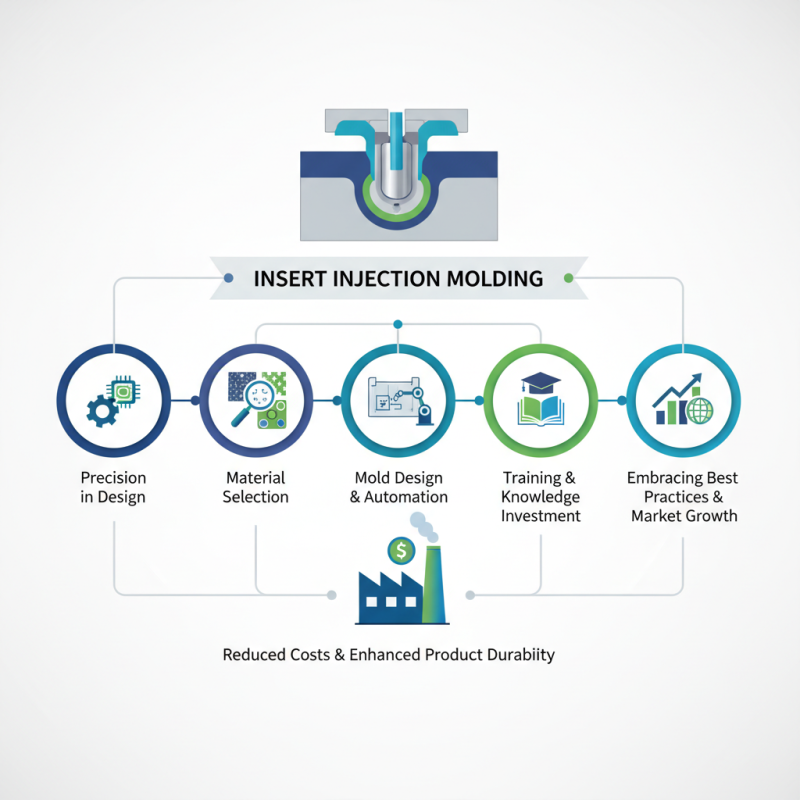
Insert Injection Molding is a specialized process that integrates both thermoplastics and metal components. This method significantly enhances product durability while reducing production costs. Industry reports indicate that the global market for insert injection molding is expected to reach $5.2 billion by 2025. This growth reflects the increasing demand for high-performance components across sectors like automotive and electronics.
Expert James Thompson, a renowned figure in injection molding technology, emphasizes, "The key to success in insert injection molding is precision in design and execution." His insight underscores the importance of careful planning and execution to avoid common pitfalls. Variables such as material selection and mold design can greatly impact the final product's quality.
Many companies still struggle with achieving optimal results. Issues often arise due to inadequate knowledge or lack of proper equipment. Therefore, investing in training and technology is essential. Embracing best practices will help manufacturers stay competitive. The journey towards mastering Insert Injection Molding requires constant learning and adaptation.
Understanding Insert Injection Molding: Basics and Benefits
Insert injection molding is an innovative manufacturing process. It combines traditional injection molding with the insertion of components. This technique enhances product functionality and reduces assembly time. Understanding the nuances of insert injection molding is crucial for success.
The benefits are clear. First, it allows for complex designs. Metal and plastic can coexist in one part seamlessly. Secondly, insert injection molding improves the final product’s durability. The inserted components reinforce weak areas. However, challenges exist. Not all materials bond well, leading to weakness. Companies must test various combinations.
Knowledge of mold design is vital. A well-designed mold ensures even material distribution. This reduces defects and increases product life. It's essential to screen alternative materials. Some materials may react negatively during injection. Understanding these factors can guide better decisions in the design process.
Selecting the Right Inserts for Effective Molding Solutions
When selecting inserts for injection molding, focus on the material's compatibility with your chosen polymer. The right insert can enhance product quality and durability. Evaluate the insert's mechanical properties, as they should match the end-use requirements of the final product. Consider factors like stiffness, thermal resistance, and wear characteristics. These aspects will ensure that the insert performs well in demanding environments.
Another essential factor is the insert's shape and size. A well-designed insert not only improves mold flow but also optimizes cycle times. Pay attention to how the insert is anchored within the mold. Inadequate anchoring can lead to movement during the molding process, impacting the dimensional accuracy of the part. Assessing your design may reveal areas that need adjustment or refinement, ultimately increasing production efficiency.
Selecting the right inserts demands ongoing evaluation and feedback. Gathering data from previous molding processes can help identify patterns and areas for improvement. Collaborating with team members can yield fresh insights, but it's also crucial to challenge assumptions. This reflection can guide future projects and enhance overall performance in mold design and production.
Optimizing Machine Settings for Quality Injection Molding
Optimizing machine settings is crucial for successful insert injection molding. Attention to detail in temperature, pressure, and timing can significantly impact the quality of the final product. For instance, maintaining the right barrel temperature helps ensure that the plastic flows smoothly into the mold. A temperature that is too low can cause clogs, while one that is too high may lead to degradation of the material.
Pressure settings also play a vital role. Adjusting injection pressure can affect mold filling and packing phases. If the pressure is too low, the mold may not fill completely. Conversely, excessive pressure can produce defects such as flash or weak spots in the molding. It is essential to find a balance based on the specific materials and designs in use.
Timing is often overlooked but is equally important. Cycle time should be optimized to prevent issues like warpage or shrinkage. Monitoring the cooling phase can help ensure consistent results. Experimentation and careful documentation of settings can aid in refining the process. Reflecting on past production runs can highlight areas for improvement, leading to more successful outcomes.
Implementing Quality Control in Insert Molding Processes
Ininsert molding, quality control is crucial for achieving optimal results. It ensures that both the insert and plastic perform well together. Implementing effective quality control processes enhances product reliability. Regular inspections during production can reveal issues early. This approach allows for adjustments before problems escalate.
One tip is to develop clear standards. Establishing these metrics can guide operations. It helps your team maintain consistent quality. Regular training sessions are vital. These sessions can reinforce best practices and highlight common pitfalls. They remind everyone that quality is everyone's responsibility.
Another tip is to use advanced monitoring tools. These tools can identify inconsistencies in real-time. Investing in technology can pay off significantly. It minimizes risks associated with human error. However, relying too heavily on technology can create complacency. Frequent manual checks are still necessary to ensure accuracy. Balancing these methods contributes to a robust quality control process.
Top 5 Tips for Successful Insert Injection Molding
This chart illustrates the importance of implementing quality control measures in various phases of the insert injection molding process, highlighting key areas of focus for manufacturers.
Troubleshooting Common Issues in Insert Injection Molding
Insert injection molding is a complex process that can encounter several hurdles. Common issues such as poor adhesion between the insert and the plastic, or the occurrence of voids can negatively impact the final product. Data from industry reports indicate that around 30% of defects are attributable to these adhesion problems. This statistic underscores the importance of proper material selection and process optimization to enhance bond strength.
Proper temperature control plays a crucial role in mitigating these problems. The optimal temperature for injection molding should be carefully maintained, as deviations can lead to incomplete fills or excessive material flow. A report from the Injection Molding Association shows that maintaining temperature within a 5-degree Celsius range can reduce defects by nearly 20%. Monitoring equipment and utilizing temperature sensors can improve reliability and consistency.
It’s important to note that not every issue can be predicted. Sometimes, variations in raw materials can lead to unexpected outcomes. A flexible approach to troubleshooting is essential. Operators should routinely check for inconsistencies and be prepared to adjust parameters. Embracing a culture of continuous improvement helps identify the root causes of problems, ultimately contributing to more successful insert injection molding operations.