
Posts
China Top 10 Solar Panel Gasket Manufacturers
China’s solar manufacturing base now serves a rapidly expanding global market. The IEA PVPS Trends 2024 report estimates that worldwide photovoltaic capacity exceeded 2.2 terawatts by the end of 2023. Annual additions also reached roughly 456 gigawatts. Behind every durable module are small sealing components that receive less attention.
A Solar Panel Gasket protects module edges, junction boxes, and cable interfaces from moisture, dust, heat, and mechanical stress. Its performance depends on material selection, compression recovery, dimensional accuracy, and resistance to ultraviolet exposure. NREL reliability studies repeatedly identify moisture ingress and material degradation as major contributors to photovoltaic failure. The Fraunhofer ISE Photovoltaics Report also highlights long-term reliability as a critical factor in reducing energy costs.
Small part. Serious consequence.
Dr. Dirk C. Jordan, a recognized photovoltaic reliability researcher, has emphasized this practical principle: “A PV module is only as reliable as its weakest component.” This view matters when comparing China’s leading gasket manufacturers. Their differences may appear minor on a specification sheet, yet silicone hardness, sealing geometry, adhesive compatibility, and production controls can decide performance after years outdoors. Factory audits, aging tests, batch traceability, and field experience deserve equal attention. Certifications alone are not enough.
This ranking should therefore be read carefully. Public data can confirm capacity, standards, and product scope, but it cannot fully reveal every supplier’s long-term failure rate. Some information remains incomplete. That limitation deserves reflection. The following guide compares ten prominent Chinese manufacturers through materials, customization capability, quality systems, application experience, and documented reliability evidence.
What Solar Panel Gaskets Are and Why They Matter
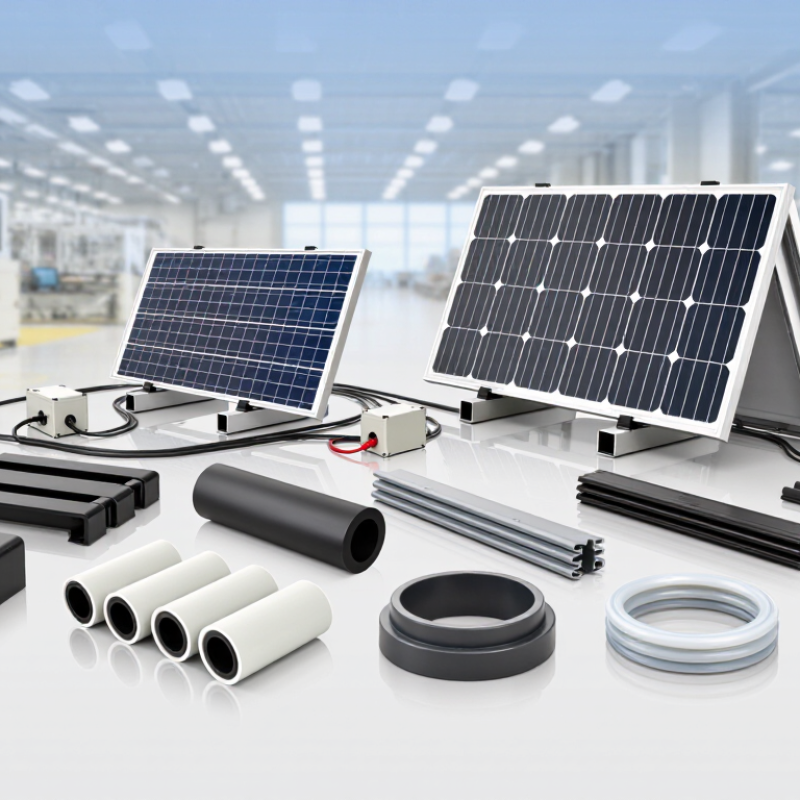
Solar panel gaskets are flexible seals placed around module frames, junction boxes, and cable entries. They limit water, dust, and air movement. A small sealing gap can become a serious failure path. During field inspections, technicians often find flattened corners, brittle rubber, or uneven compression near mounting points. These details matter more than a gasket’s appearance.
The IEA PVPS Trends 2024 report recorded more than 456 GW of new photovoltaic capacity worldwide in 2023. Global installed capacity exceeded 1.6 TW. More modules mean more seals exposed to heat, moisture, vibration, and ultraviolet radiation. NREL-backed degradation research commonly reports a median module degradation rate near 0.5% per year, although climates and products vary. Poor sealing can accelerate moisture-related problems, including corrosion and insulation loss.
Material selection is only part of the answer. Engineers must check compression recovery, temperature range, chemical resistance, and dimensional tolerance. IEC 61215 testing evaluates environmental durability, but laboratory results cannot represent every rooftop or utility site. That is where judgment becomes important. A gasket may pass testing yet fail after uneven frame assembly. Not perfect. Regular sampling, visual checks, and moisture inspection can reveal problems early. The best design is quiet, consistent, and still flexible after years outdoors.
China Top 10 Solar Panel Gasket Manufacturers - What Solar Panel Gaskets Are and Why They Matter
| No. | Gasket Type or Configuration | Typical Material | Typical Hardness | Typical Service Temperature | Main Function | Important Performance Factors |
|---|---|---|---|---|---|---|
| 1 | Frame Perimeter Gasket | EPDM rubber | 60–80 Shore A | Approximately −45°C to 150°C | Seals the interface between the module laminate and the aluminum frame. | Low water absorption, compression-set resistance, UV stability, and accurate dimensional fit. |
| 2 | Edge Protection Gasket | Silicone rubber | 50–80 Shore A | Approximately −60°C to 200°C | Protects glass and laminate edges from impact, moisture, and mechanical damage. | Wide temperature range, weather resistance, elastic recovery, and non-staining contact surfaces. |
| 3 | Glass-to-Glass Sealing Strip | Silicone or EPDM | 40–75 Shore A | Approximately −50°C to 180°C | Creates a flexible moisture barrier between adjacent glass surfaces. | Low compression force, continuous sealing, dimensional uniformity, and resistance to hydrolysis. |
| 4 | Junction Box Seal | EPDM, silicone, or thermoplastic elastomer | 50–80 Shore A | Approximately −40°C to 150°C | Seals the junction box against rain, dust, and condensation. | Ingress protection, electrical insulation, tear resistance, and compatibility with potting materials. |
| 5 | Cable Outlet Grommet | EPDM or silicone rubber | 50–75 Shore A | Approximately −50°C to 180°C | Seals and supports cables passing through the module or junction box. | Strain relief, cable-jacket compatibility, abrasion resistance, and resistance to water ingress. |
| 6 | Mounting Rail Interface Seal | EPDM sponge or solid EPDM | 35–70 Shore A | Approximately −45°C to 150°C | Reduces water penetration and vibration at the module-to-rail interface. | Compression recovery, load distribution, weathering resistance, and controlled friction. |
| 7 | Laminated Module Edge Seal | Butyl rubber or PIB-based sealant | Soft, typically 20–60 Shore A | Approximately −40°C to 120°C | Limits moisture and gas transmission along the laminate perimeter. | Very low gas permeability, adhesion, low water vapor transmission, and long-term tack retention. |
| 8 | Connector Housing Seal | Silicone or fluorosilicone rubber | 40–75 Shore A | Approximately −60°C to 200°C | Maintains a sealed electrical connection during outdoor operation. | Dielectric strength, sealing lip geometry, mating-cycle durability, and resistance to ozone and UV. |
| 9 | Vent Membrane Seal | Microporous expanded PTFE with elastomer support | Application-dependent | Approximately −40°C to 150°C | Equalizes pressure while blocking liquid water and contaminants. | Air permeability, water entry pressure, chemical resistance, and stable attachment to the enclosure. |
| 10 | Fire-Resistant Enclosure Gasket | Flame-retardant silicone or EPDM compound | 55–80 Shore A | Approximately −40°C to 180°C | Seals equipment enclosures where flame resistance and environmental protection are required. | Flammability rating, smoke characteristics, compression set, electrical insulation, and weather resistance. |
Note: Performance ranges are typical engineering values and can vary according to compound formulation, profile design, compression, installation method, and environmental exposure.
Key Criteria for Evaluating Chinese Gasket Manufacturers
China Top 10 Solar Panel Gasket Manufacturers
The IEA PVPS Trends 2024 report recorded about 456 GW of new solar capacity worldwide in 2023. This growth increases pressure on small sealing parts. A gasket may sit quietly, yet moisture can damage connectors, frames, and insulation. When evaluating Chinese gasket manufacturers, examine material data before accepting production claims. Ask for EPDM or silicone compound specifications, compression-set results, UV resistance, ozone resistance, and operating-temperature ranges. Test reports should identify standards, laboratories, sample sizes, and test dates.
Production control matters as much as rubber chemistry. Review ISO 9001 procedures, incoming-material records, mold maintenance, dimensional inspection, and batch traceability. Request samples from three separate lots. Check thickness, hardness, burrs, surface marks, and compression recovery. IEC 61215 and IEC 61730 address photovoltaic module performance and safety, but they do not replace gasket-specific testing. This distinction is easy to miss. I have seen technically impressive samples fail during repeated compression because the production process changed.
Tips: Compare the supplier’s test data with your own aging tests. Use thermal cycling, humidity-freeze, UV exposure, and water-ingress checks. Ask how rejected parts are recorded. A reliable manufacturer explains failures, not only successful results. The Fraunhofer ISE Photovoltaics Report 2024 highlights long-term reliability as a key factor in reducing system losses. Therefore, evaluate tooling life, replacement-part consistency, packaging, lead times, and technical response speed. Price deserves attention, but a cheaper gasket can create expensive field inspections.
Top 10 Solar Panel Gasket Manufacturers in China
China’s solar panel gasket sector is expanding with the photovoltaic supply chain. The IEA PVPS Trends 2024 report recorded 216.9 GW of new solar capacity in China during 2023. This scale increases demand for reliable sealing materials, especially in humid, coastal, and desert projects. The top 10 solar panel gasket manufacturers in China should therefore be assessed by more than production volume.
Strong candidates usually provide silicone, EPDM, or composite gaskets with controlled compression recovery. Their products should support IEC 61215 and IEC 61730 testing environments. ISO 9001 systems also improve traceability, batch control, and corrective action. The NREL Photovoltaic Degradation Rates report commonly references around 0.5% annual module degradation, although gasket failure can accelerate moisture-related damage. Small details matter. A stable corner joint matters.
Factory audits should examine die accuracy, surface defects, tensile strength, elongation, and aging performance. Testing under damp heat, ultraviolet exposure, and temperature cycling can reveal weak formulations. The Fraunhofer ISE Photovoltaics Report 2024 highlights the industry’s continuing focus on lower costs and longer operating lifetimes. That pressure can create compromises. Thinner profiles may reduce material use, but they can narrow installation tolerance.
A practical review should compare sample consistency, delivery records, engineering support, and documented test data. Rankings are not perfectly stable. Resin quality, tooling maintenance, and inspection discipline may change between production batches. Buyers should request recent reports, not only impressive certificates.
Product Types, Materials, and Manufacturing Capabilities
China’s top solar panel gasket manufacturers serve a rapidly expanding market. IRENA reported 1,419 GW of global solar capacity by the end of 2023. This growth increases demand for reliable edge seals, junction-box gaskets, and frame sealing strips. The strongest suppliers usually offer EPDM, silicone, butyl rubber, and thermoplastic elastomer options. Each material behaves differently under heat, moisture, ultraviolet exposure, and compression.
Product formats include continuous extruded profiles, die-cut rings, adhesive-backed strips, and custom molded parts. EPDM often suits outdoor sealing because of its weather resistance. Silicone performs better across wider temperature ranges, but it costs more. Butyl provides strong moisture resistance. Manufacturing capability matters equally. Look for automated extrusion, co-extrusion, precise cutting, controlled vulcanization, and clean adhesive lamination. Experienced factories should also measure compression set, dimensional tolerance, peel strength, and aging performance. IEC 61215 and IEC 61730 testing frameworks help verify module durability and safety, although gasket testing still needs application-specific evidence.
Tips: Ask for samples from multiple production batches. Check thickness at several points. Review test reports, not only certificates. IEA PVPS reports that harsh climates and long module lifetimes are increasing quality expectations. A supplier may claim twenty-five-year performance, yet the gasket design can still fail through poor compression or installation. This is easy to overlook. Request accelerated aging data, storage guidance, and traceability records before approving mass production. Cost comparisons should include tooling, scrap rates, replacement risk, and inspection labor. A cheaper profile is not always cheaper.
How to Choose the Right Chinese Gasket Supplier
China Top 10 Solar Panel Gasket Manufacturers: How to Choose the Right Chinese Gasket Supplier
Global solar capacity grew rapidly in 2023. The IEA PVPS Trends in Photovoltaic Applications 2024 report recorded more than 400 GW of new installations worldwide. This growth increases demand for durable panel gaskets, but volume alone should not decide your supplier. Check the gasket’s EPDM or silicone grade, hardness, compression set, UV resistance, and operating temperature. Ask for batch-level test reports, material certificates, and dimensional inspection records. A reliable factory should explain its tooling process clearly, not only send attractive samples.
Request production evidence before signing a large order. Review ISO 9001 procedures, incoming-material controls, mold maintenance, and traceability from compound to shipment. For photovoltaic applications, confirm compatibility with relevant IEC 61215 and IEC 61730 testing requirements. These standards do not replace independent testing. They create a useful baseline. The Fraunhofer Photovoltaics Report 2024 shows that module performance continues improving, so sealing materials must also survive longer thermal and environmental stress. A cheaper gasket may become expensive after swelling, cracking, or compression loss. That risk is easy to underestimate.
Tips: Send a drawing with tolerances, not only a sample. Test three production batches. Compare compression recovery after heat, humidity, and UV exposure. Visit the plant if possible, or appoint an independent inspector. Be cautious when a supplier promises perfect consistency; real production always has variation, and your quality plan should measure it.
