
Why Choose Laser Cut Plastic for Custom Parts?
Custom parts often demand more than a suitable shape. They need clean edges, consistent dimensions, and dependable material performance. That is where laser cut plastic can offer a practical advantage. A focused laser follows digital drawings with impressive repeatability. It can produce prototypes, panels, brackets, spacers, and covers without expensive metal tooling. Acrylic, polycarbonate, PETG, and other plastics respond differently during cutting. Material selection still matters.
In real workshop use, the result depends on more than machine accuracy. Sheet thickness, kerf width, heat buildup, and ventilation can influence the finished part. A small acrylic panel may show a polished edge, while another plastic may soften or discolor. These details should be tested early. They are easy to overlook. Laser cutting also supports fast design changes. Engineers can revise a CAD file and produce another sample without rebuilding a mold. This shortens feedback cycles and helps reveal weak joints, tight clearances, or unsupported spans. However, it is not a universal solution. Thick sections, heat-sensitive plastics, or demanding structural loads may require routing, machining, or another fabrication method. A reliable supplier should explain these limits clearly. They should confirm tolerances, inspect sample edges, and recommend suitable materials for the intended environment. In this guide, we examine why laser cut plastic remains popular for custom parts. We also consider its limitations, costs, surface quality, and practical design requirements. The aim is simple: make better decisions before production begins.
What Is Laser Cut Plastic and How Does It Work?
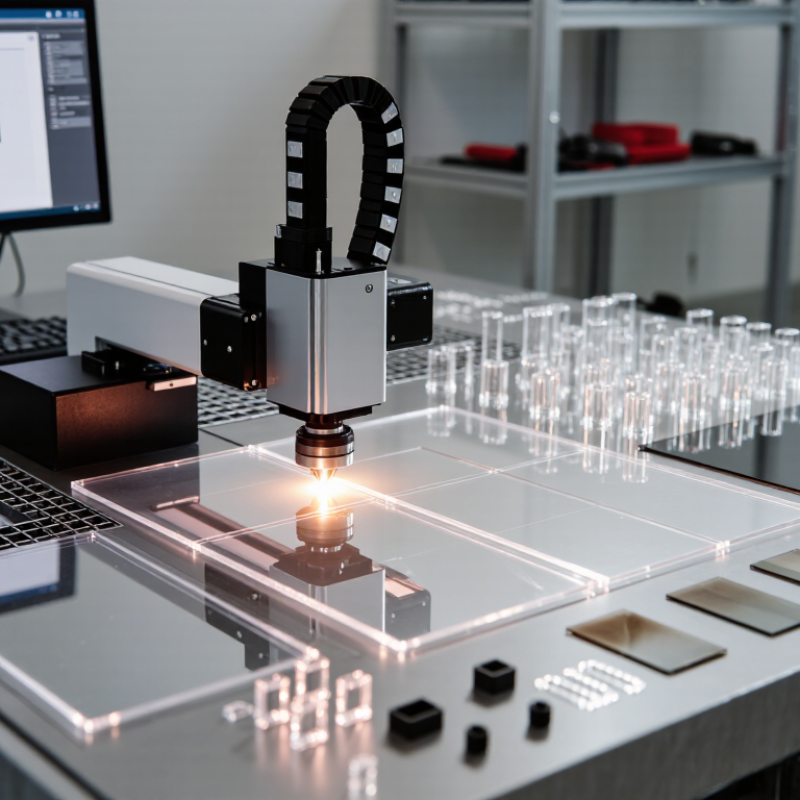
Laser cut plastic is sheet material shaped by a focused beam of light. The beam follows digital vector paths created in computer-aided design software. As it moves, heat melts or vaporizes a narrow section of plastic. Air assistance removes debris and helps protect the cut surface. The result can include panels, brackets, covers, spacers, and other custom parts.
Material selection controls the process. Acrylic usually produces a clean, polished-looking edge, while other plastics may melt, discolor, or warp. Some materials are unsuitable because their fumes can damage equipment or create serious health risks. Safe fabrication requires verified material data, proper ventilation, protective equipment, and trained operation.
In practical production, thickness, beam focus, cutting speed, and heat control affect accuracy. A small test coupon can reveal melting, taper, or unwanted burrs before a full sheet is cut. Edges can vary. Designers should allow for kerf, which is the narrow material width removed by the beam. Tight fits need inspection with calipers, not guesswork. My first assumption can fail: a visually smooth edge does not always mean the part meets its required tolerance. Laser cutting is efficient for repeatable shapes, but deep cavities, heat-sensitive plastics, and complex three-dimensional forms may need another process. Clear drawings, confirmed tolerances, and documented material specifications make custom parts more dependable.
Why Choose Laser Cut Plastic for Custom Parts? - What Is Laser Cut Plastic and How Does It Work?
| Data Dimension | Typical Information | How the Laser-Cutting Process Works | Value for Custom Parts |
|---|---|---|---|
| Definition | Laser cut plastic is a sheet material shaped by a focused laser beam that locally melts, vaporizes, or thermally decomposes the plastic along a programmed path. | A digital CAD file guides the cutting head while the laser concentrates energy into a small area to create the required profile. | Enables repeatable production of precise two-dimensional components without mechanical cutting tools. |
| Commonly Suitable Plastics | Acrylic, polycarbonate, PETG, polyethylene, polypropylene, ABS, and some engineering plastics can be processed, subject to equipment and material-specific testing. | Laser power, speed, focus, air assist, and processing strategy are adjusted according to the polymer's melting behavior and thickness. | Provides material flexibility for transparent panels, housings, spacers, covers, gaskets, and prototypes. |
| Materials Requiring Caution | PVC, vinyl, fluorinated plastics, and unknown plastic mixtures may release corrosive or hazardous fumes when heated. | Material safety data and composition must be verified before cutting. Suitable extraction and filtration are also required. | Reduces risks to operators, equipment, and the finished part. |
| Typical Sheet Thickness | Common laser-cut plastic sheet work is often performed from approximately 0.5 mm to 12 mm, although the practical range varies by polymer, laser type, and part geometry. | Thicker sheets generally require lower cutting speeds, multiple passes, or a different cutting method. | Supports both thin flexible components and thicker structural or protective parts. |
| Dimensional Accuracy | Typical finished-part accuracy is commonly specified around ±0.1 mm to ±0.3 mm for suitable materials and moderate part sizes; actual results depend on thickness, thermal expansion, machine calibration, and geometry. | The motion system follows the digital tool path while the focused beam creates a narrow kerf. | Useful for repeatable assemblies, templates, mounting plates, and interlocking features. |
| Kerf Width | The material removed by the laser, known as kerf, is commonly about 0.1 mm to 0.5 mm in plastic sheet cutting, depending on the machine and processing settings. | Design files can be compensated for kerf when a close fit or dimensional accuracy is important. | Helps improve fit between mating parts and reduces avoidable dimensional variation. |
| Heat-Affected Zone | A narrow heat-affected area may appear along the cut edge. Its width and appearance depend on the material, thickness, power, speed, and cooling conditions. | Optimized settings limit excess heat and reduce melting, discoloration, or edge deformation. | Can produce clean edges while preserving the surrounding sheet for nearby features. |
| Edge Appearance | Acrylic may produce a relatively smooth, polished-looking edge. Other plastics may show slight frosting, melting, burrs, or discoloration. | Focus position, beam profile, gas assistance, and cutting parameters influence the final edge finish. | May reduce secondary finishing for visible components, especially when the material responds well to laser processing. |
| Design File Requirements | Vector formats such as DXF, DWG, SVG, or AI are commonly used. Closed profiles, consistent scale, and clearly defined cut lines are recommended. | The control software converts vector paths into movement and laser instructions. | Digital preparation simplifies revisions, nesting, scaling, and repeat orders. |
| Tooling Requirement | No dedicated die, mold, or cutting tool is normally required for flat laser-cut sheet parts. | The machine changes geometry through software rather than by changing a physical cutting tool. | Suitable for prototypes, low-volume production, and designs that change frequently. |
| Production Flexibility | Different part profiles can be nested on one sheet and produced in the same setup. | Software controls the sequence and position of each cut from the digital design. | Helps reduce setup time and material waste for varied custom-part orders. |
| Heat-Sensitive Features | Very small holes, narrow webs, sharp internal corners, and closely spaced cuts may be affected by heat accumulation. | Part orientation, cutting order, pulse settings, and spacing can be adjusted to distribute heat. | Designing with suitable feature sizes improves edge quality and part stability. |
| Post-Processing | Optional operations include deburring, cleaning, masking removal, flame polishing for compatible plastics, drilling, bending, bonding, and engraving. | Secondary work is selected according to the material, appearance requirements, and functional tolerances. | Allows laser-cut components to be prepared for assembly or final presentation. |
| Best-Fit Applications | Common applications include electrical insulation, protective covers, transparent guards, signage, prototypes, brackets, spacers, panels, and laboratory or display components. | The laser produces the required flat geometry directly from the digital design. | Offers a practical balance of speed, customization, repeatability, and design freedom. |
| Key Selection Factors | Material type, sheet thickness, required tolerance, edge appearance, part size, quantity, heat sensitivity, and safety requirements should be evaluated together. | These factors determine the appropriate laser settings, ventilation approach, and whether another fabrication method is more suitable. | Improves part quality, production safety, and overall process reliability. |
Note: The numerical ranges are typical planning values rather than universal specifications. Final results depend on the plastic grade, sheet supplier, machine configuration, part geometry, and processing parameters.
Related Posts
-
Best Laser Cut Plastic Services for Your Next Project?
-

Top Plastic Sheets in China for Global Buyers?
-
What Are the Best Precision Plastics Manufacturers in China?
-

Top Uses of Plexiglass Sheets in Everyday Life?
-
How to Use Clear Acrylic Sheets for Creative DIY Projects?
-
Top 10 Acrylic Plastic Manufacturers Worldwide?